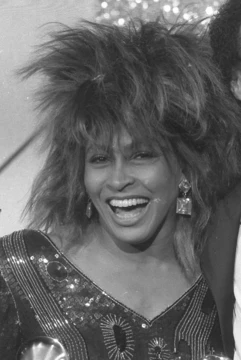
Tina Live in London
The Queen of Rock 'n' Roll, unleashed in the heart of London.

Tina Live in London is a live album capturing Tina Turner in full, incandescent glory during her triumphant 1990s comeback era. It documents a concert performance in London that crystallized everything audiences loved about her stage presence: the thunderous vocal power, the relentless dance routines, and the electric connection between performer and crowd that defined her as one of rock and soul's most commanding live acts.
As a live recording, the album sits apart from her studio work, preserving the spontaneity, audience roar, and extended improvisations that only a concert setting can deliver. It stands as a snapshot of Tina at the peak of her physical and vocal command, a period when her shows were global events in their own right.
- Artist
- Tina Turner
- Format
- Live album
- Genre
- Rock, Soul, Blues
- Era
- 1990s comeback period
- Performance location
- London, England
Lore & Background
By the time Tina Turner took the stage in London during this era, she was no longer simply a singer—she was a full-body spectacle. Her live performances were legendary for their physicality: the splits, the backflips, the mic held by a single extended arm while her legs flew in a high kick. Audiences who saw her in the 1990s often described the experience as witnessing a natural force, something that could not be replicated in a studio booth.
London held a special place in her career. The British public had embraced her through the decades, from her early Ike & Tina Turner days through her solo reinvention. A live recording from the city carried the weight of that long relationship, and the crowd's energy in the recording—shouts, claps, the collective gasp before a vocal run—becomes part of the performance itself.
For fans, the album represents the 'Tina' that studio tracks only hint at: the raw, unfiltered, slightly dangerous version who could belt a high note while doing a full spin, who would drop to her knees in the middle of a ballad and then spring back up for the next number as if nothing had happened. It is the album of the show, not the song.
In Their Own Story
The arena lights dim to a single amber spot. You can hear the crowd shift, a low murmur rippling through thousands of seats, and then—a stomp. One. Two. Three. Four. The bass drops like a fist through the floor, and she is already there, already moving, a flash of sequins and defiance cutting through the haze. The first note she hits is so clean, so impossibly placed, that the person next to you stops breathing. By the second chorus you are on your feet, not because you chose to be, but because your body simply cannot remain seated while that voice is in the building. Somewhere in the middle of the set she drops into a split, holds it, grins up at the crowd, and the roar that answers is not applause. It is something older. It is the sound of a city remembering what it means to be moved by a single human being, standing in the light, refusing to stop.
Reader's Guide
Tina Live in London is a live concert recording, not a studio album, and should be understood in that context. It captures a full performance set from her 1990s comeback era, a period when her touring shows were among the most physically demanding and visually spectacular in popular music.
The track listing follows the arc of a typical Tina concert: high-octane openers that establish her vocal range, a mid-set stretch of soul and blues material where she lets the emotion breathe, and a closing sequence of anthemic rock numbers that leave the audience in a state of collective release. Standout moments tend to be the extended vocal runs and the dance interludes between songs, which are less present in studio recordings.
In her broader artistic arc, this recording sits in the post-What's Love Got to Do with It era, when her reputation as a live performer had been fully re-established. It complements her studio albums of the period by showing the raw, unpolished energy that the studio versions smooth over. For listeners who find her studio work polished and controlled, the live recording reveals the chaos and power underneath.
Production notes are minimal by design: the goal is to capture the room, the crowd, and the performance as experienced in the moment. Chart performance and commercial data for live albums of this type are generally less tracked than studio releases, and the album's value to fans lies in its documentary quality rather than its commercial metrics.
Did You Know?
- Tina Turner's live performances in this era were renowned for their physical intensity, with full dance routines including splits and acrobatic moves performed between vocal numbers.
- The London audience had a long-standing relationship with Tina Turner, having supported her through both her early Ike & Tina Turner years and her solo comeback, making the crowd energy in the recording particularly char
- Live albums from this period often feature extended improvisations and audience call-and-response sections that are absent from her studio recordings, giving fans a different window into her vocal technique.
- Tina's 1990s touring shows were structured as full theatrical experiences, with costume changes, choreographed dance breaks, and direct audience interaction woven throughout the set.
More in Albums & Discography
Elsewhere in the Tina Turner universe
Spotted an error? Know more?
This is a living reference — every entry is fact-audited, and reader corrections feed straight into our audit queue. Suggest an edit · See this site's audit record