
River Deep Mountain High
One woman's voice, a wall of sound, and a love that outlasts every mountain and river on earth.

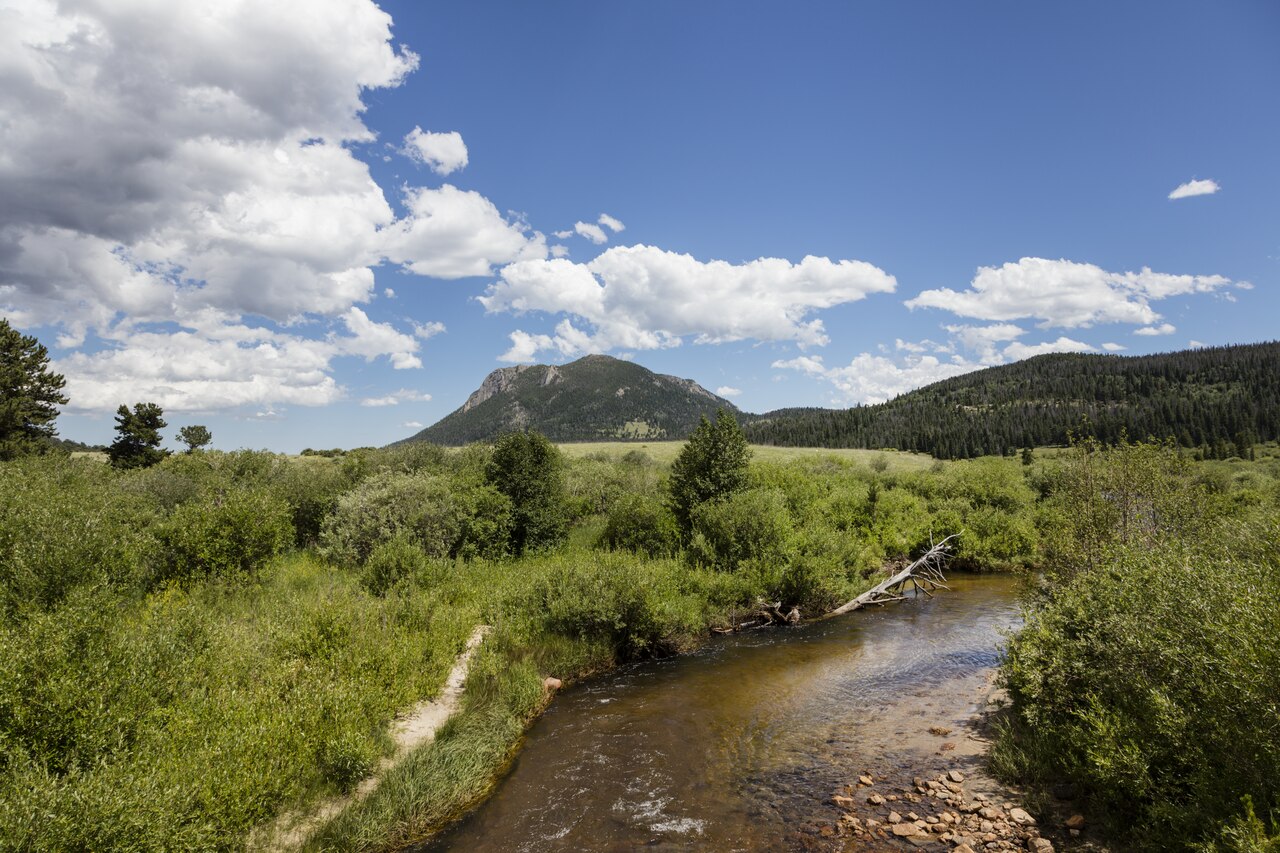
Carol M. Highsmith · Public domain
River Deep Mountain High is the thunderous, all-consuming love ballad that became inseparable from Tina Turner's name. Written by Phil Spector and Gerry Goffin and produced by Spector's legendary Wall of Sound technique, the track was recorded by Ike & Tina Turner in 1966 and became a number-one hit in the United Kingdom, where it still stands as one of the most beloved singles in chart history. Beyond its chart success, the song evolved into Tina Turner's signature emotional climax on stage. Whether in the Ike & Tina era or her triumphant solo career, the moment she launched into that opening cry of devotion was a ritual that audiences worldwide recognized instantly—a declaration that love, for her, was not a whisper but a force of nature.
- Artist
- Ike & Tina Turner
- Writers
- Phil Spector & Gerry Goffin
- Producer
- Phil Spector
- Year recorded
- 1966
- Peak UK Singles Chart
- #1
- Production style
- Wall of Sound
- Genre
- Soul / Power Ballad
Lore & Background
The song was born in the mid-1960s when Phil Spector, already famous for his layered, orchestral production aesthetic, teamed with lyricist Gerry Goffin to craft what he described as a love song that would feel as vast as the natural world. The result was a track built on a simple, repeating melodic hook over a dense, shimmering arrangement of strings, horns, and percussion—a sonic cathedral designed to make a single voice sound like a choir. Ike & Tina Turner recorded it in 1966, and Tina's delivery—raw, gospel-tinged, and utterly committed—gave the composition a human fire that pure studio polish could never achieve. In the United States the single stalled, but in the UK it detonated, climbing to number one and remaining a staple of radio and jukeboxes for decades. For Tina, the song became something more than a hit; it was an identity marker. In the years of her solo career, after the turbulent end of her partnership with Ike, she would close concerts with River Deep Mountain High, and the audience's collective roar became part of the song's mythology. It was her way of saying, to the world and to herself, that the love she sang about was still hers to claim. The 1993 biographical film What's Love Got to Do with It cemented the track's cultural permanence for a new generation, and covers by artists ranging from the Bee Gees to contemporary pop singers keep the melody alive. Yet for most fans, no version rivals the original 1966 recording or the live renditions where Tina, sometimes in a simple white dress, sometimes in sequined armor, let the last note hang in the air until the stadium fell silent and then erupted.
In Their Own Story
The arena was already dark when the house lights dimmed one final time. No band intro, no spoken thank-you. Just a single spotlight, a microphone stand, and Tina. She gripped the mic with both hands, closed her eyes, and let out a breath that the front row could feel as a warm gust. Then the first note—low, aching, rising—cut through the silence like a blade through silk. The Wall of Sound swelled behind her, strings and horns braiding into a tide, and she sang as though every word were a promise she had to keep or die. By the second verse, strangers in the crowd were holding hands. By the final line, the whole arena was one body, one heartbeat, one river running deep past every mountain she had ever climbed to get to that stage.
Reader's Guide
The origin is inseparable from Phil Spector's studio. In 1966, Spector and Gerry Goffin set out to write a love song that felt geological in scale. Spector stacked layers of strings, flutes, horns, and percussion until the arrangement became a living wall of sound, and into that wall he placed Tina Turner's voice—gospel-bred, unpolished, and ferociously honest. The result was a track that sounded less like a pop single and more like a hymn performed inside a canyon. In the UK, the single rocketed to number one, and it stayed in the cultural bloodstream for decades. In the US it underperformed, but that only sharpened its legend. For Tina, the song became the emotional summit of every concert. Fans remember the solo-era closings: she would step to center stage, often in a simple white gown or a glittering bodysuit, raise the mic, and let the first sustained note build until the crowd's roar merged with the backing track. There was no elaborate choreography—just the raw physicality of her voice, the slight sway of her hips, the way she'd tilt her head back on the final phrase and let the note dissolve into the rafters. The 1966 studio recording remains the definitive version, but live bootlegs and official concert films from the 1980s and 1990s capture the moment the audience becomes part of the harmony. The 1993 film What's Love Got to Do with It introduced the song to a new generation and locked it into pop-culture memory. Today, River Deep Mountain High stands as the touchstone against which every other love ballad is measured: proof that one voice, properly committed, can outlast an entire orchestra.
Did You Know?
- Phil Spector's Wall of Sound production on the track involved recording dozens of instruments simultaneously to create a single, dense audio 'wall,' a technique he pioneered in the early 1960s.
- Despite its global fame, the song initially failed to chart significantly in the United States, a fact that made its UK number-one success all the more legendary among fans.
- Tina Turner reportedly performed the song as a closing number at the end of nearly every concert throughout her solo career, making it one of the most repeated set-list closers in rock and soul history.
- The song has been covered by a wide range of artists across genres, from the Bee Gees to contemporary pop singers, yet most fans still consider the 1966 Ike & Tina recording the definitive take.
The Grueling Birth of a Masterpiece
River Deep – Mountain High marked Tina Turner's very first session for Philles Records, cut at Gold Star Studios. Spector, Barry, and Greenwich had penned the track, and the production demanded a staggering twenty-one session musicians at a cost of twenty-two thousand dollars—a sum virtually unheard of at the time. After two days of laying down the backing track, Spector brought Tina in on March 7, but she could not deliver what he envisioned. The following week she returned alongside Ike, and what followed was a marathon of repetition. Spector's notorious perfectionism and harsh studio demeanor pushed her to sing the same passage over and over for hours. Tina later recalled singing it "500,000 times," so drenched in sweat she had to remove her shirt and perform in her bra. The Blossoms, rather than her regular backing group the Ikettes, supplied the harmony vocals. Brian Wilson of the Beach Boys reportedly sat in the control room transfixed, saying not a word. In a 1991 Hall of Fame speech, Spector revealed he had invited Ike to play guitar on the session, but Turner never showed up.
A Song Without a Home
Despite the extraordinary production, the single stalled at number eighty-eight on the Billboard Hot 100, and the parent album was quietly shelved in the United States. Ike Turner later offered a pointed explanation: radio stations in both communities refused to embrace the record. White programmers dismissed it as too Black, while Black stations considered it too white, leaving the song without a natural audience. Writer Michael Billig added a broader cultural dimension, suggesting that by 1966 the growing Black political movement was encouraging African Americans to take pride in their own musical traditions, making a record that blended a Black vocalist with a white pop production feel out of step with the times. The commercial failure devastated Spector. He withdrew entirely from the recording industry for two years, becoming a recluse and beginning a period of self-destruction that would shadow the rest of his career. The episode remains one of the most cited examples of how racial segregation in the American music industry could render a genuinely great record commercially invisible.
Transatlantic Triumph
While American radio turned its back, European audiences embraced the record wholeheartedly. Released on London Records across the continent, the single climbed to number three in the United Kingdom, number nine in the Netherlands, and all the way to number one in Spain. The contrast with the domestic reception was stark. Critics in the US had been enthusiastic—Billboard praised the "exciting dance beat" and Tina's "wailin' vocal," while Record World predicted it would be remembered as a classic Spector record—but the commercial machinery simply failed to deliver. Across the Channel, the song found the audience it deserved. George Harrison, no stranger to discerning taste, declared it "a perfect record from start to finish" and insisted nothing could be improved upon it. The European success proved that the song's power transcended the racial and genre boundaries that had confined it in America, and it set the stage for the broader recognition that would eventually follow.
From Obscurity to Immortality
The song's second life began in 1968 when Eric Burdon and the Animals and Deep Purple each recorded their own covers, reintroducing the material to a new generation. A&M Records seized the moment and reissued the original Ike & Tina version in 1969, and the critical consensus shifted dramatically. Record World called it "perhaps the greatest single of all time." Over the following decades, the song accumulated honors that Spector had never seen during his two-year retreat: the Grammy Hall of Fame inducted it in 1999, Rolling Stone placed it at number thirty-three on their 2004 list of the five hundred greatest songs, NME ranked it thirty-seventh on their equivalent poll, and the Rock and Roll Hall of Fame included it among the five hundred songs that shaped rock and roll. The 1993 biographical film What's Love Got to Do with It dramatized the grueling studio sessions, embedding the recording story in popular culture. Tina herself revisited the song in solo recordings in 1986, 1991, and 1993, while the Supremes and Four Tops offered their own post-Diana Ross interpretation in 1970.
Gallery



Frequently Asked Questions
Who wrote and produced River Deep Mountain High?
Phil Spector and Gerry Goffin penned the song, and Spector also produced it using his famous Wall of Sound technique. Ike & Tina Turner recorded the track in 1966.
What chart did River Deep Mountain High top?
The single reached number one on the UK Singles Chart and is still cited as one of the most adored entries in British chart history. Its dominance in the UK cemented it as a cornerstone of Tina Turner's recording legacy.
Why is River Deep Mountain High considered Tina's signature stage moment?
The song became the emotional climax of her live performances throughout both the Ike & Tina era and her solo career. The instant she launched into the opening line, audiences recognized it as the defining peak of a Tina Turner show.
What production technique gave the song its massive sound?
Phil Spector layered dense, overlapping instrumentation to build what he called the Wall of Sound, creating an overwhelming sonic backdrop behind Tina's voice. The effect paired a single, thundering vocal with an almost physical wall of layered audio.
What is the lyrical theme of River Deep Mountain High?
The track is an all-consuming love ballad that borrows the imagery of rivers and mountains to describe a devotion that outlasts every natural barrier on earth. Its sheer emotional intensity is a major reason it became inseparable from Tina Turner's name.
More in Iconic Songs & Signature Performances
Elsewhere in the Tina Turner universe
Spotted an error? Know more?
This is a living reference — every entry is fact-audited, and reader corrections feed straight into our audit queue. Suggest an edit · See this site's audit record