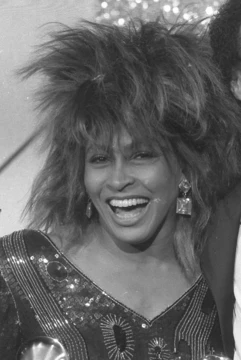
Ray Charles
The blind pianist who taught a generation that the soul could be heard through the keys.

Though he never sat in her band or shared a stage as a regular collaborator, his pioneering work in soul, R&B, and gospel-inflected pop shaped the very soil from which the raw, electric energy of 1960s rock-and-roll—and Tina's breakout voice—grew. In this fan encyclopedia he is catalogued as a contemporaneous giant: a musician whose innovations in blending gospel, blues, and jazz defined the era's grammar, and whose influence is felt in the emotional directness that made Tina Turner's performances so viscerally powerful. For fans tracing the lineage of the music Tina Turner helped electrify, Ray Charles is the indispensable 'other thread'—the blind pianist from Alabama who proved that a single voice could carry the weight of an entire tradition, long before a woman in a sequined dress made the whole world feel it in her chest.
- Primary instruments
- Piano, voice
- Signature song (widely known)
- Georgia on My Mind
- Hall of Fame
- Rock and Roll Hall of Fame inductee
Lore & Background
Ray Charles grew up in the rural American South, losing his sight as a small child and learning to navigate the world through sound. That early immersion in gospel choirs, blues juke joints, and the raw vocal traditions of the Black church became the crucible for a style that had no prior name. By the late 1950s he had fused those threads—gospel fervor, blues phrasing, jazz harmony, and pop accessibility—into what the world would come to call 'soul.' His piano work was percussive, rhythmic, almost architectural, building grooves that made the body move before the mind could follow. In the same years that a young Tina Turner was honing her stagecraft in the clubs of St. Louis and then the national circuit with Ike Turner, Ray Charles was rewriting what a pop record could feel like. His recordings demonstrated that emotional honesty, rhythmic drive, and a voice that cracked and soared in the same breath could cross every racial and genre boundary. The landscape he helped build was the one into which Tina Turner's ferocious, unapologetic performance style would later detonate. His later decades saw him become a cultural institution: a Grammy winner, a philanthropist, a figure whose name was shorthand for musical integrity. For Tina Turner fans, his legacy is the invisible architecture—the proof that the American songbook was always big enough to hold both his tender ballads and her thunderous rock.
In Their Own Story
The club was half-empty, the kind of Tuesday where the bartender leans on the bar and pretends he's not listening. The house band finishes a set, packs their amps, and the room goes quiet except for the hum of the neon sign outside. Then a single piano chord rings out—low, round, deliberate. The audience doesn't turn; they just stop breathing. The voice that follows is not loud. It doesn't need to be. It sits in the middle of the chest like a hand pressing gently against a bruise, and for four minutes the room is not a room. It is a church, a kitchen, a highway at 2 a.m. When the last note decays into the carpet, nobody claps. They just sit there, a little more themselves than they were an hour ago, waiting for the next chord to tell them they can go back to being people.
Reader's Guide
Ray Charles is not a member of Tina Turner's band, and no fan should mistake him for one. His place in this encyclopedia is that of the parallel titan—the musician working in the same American soil, the same decade, the same emotional register, but on the other side of the genre fence. Where Tina Turner's story is one of explosive stage presence, survival, and reinvention, Ray Charles's is one of quiet, relentless innovation in the studio and on the piano bench. Era: His peak creative years (late 1950s through the 1970s) overlap directly with Tina Turner's rise from the Ike Turner era into her solo dominance. Fans who love the raw, gospel-tinged energy in Tina's live recordings can trace that lineage back through the same church traditions and blues vocabulary that Ray Charles helped codify for a national audience. Notable recordings to explore alongside Tina's catalog: 'Georgia on My Mind,' 'I Got a Woman,' 'What'd I Say.' These tracks share with Tina's best work a commitment to feeling over polish, to the voice as a physical instrument. How his 'relationship' shaped the music: There was no direct professional relationship. But the cultural conversation was constant. Every artist of that generation—Tina included—was either building on the foundations he laid or pushing against them. Knowing his name and his sound gives a fan the missing context for why the 1960s and 70s American music scene felt so electric, so full of competing voices all reaching for the same emotional truth.
Did You Know?
- Ray Charles lost his sight as a small child and learned to navigate the world through sound.
- By the late 1950s he had fused gospel, blues, jazz, and pop into what the world would come to call 'soul.'
- His piano work was percussive and rhythmic, building grooves that made the body move before the mind could follow.
More in Band Members & Collaborators
Related in Tina Turner
Links follow this subject's own source article.
Elsewhere in the Tina Turner universe
Spotted an error? Know more?
This is a living reference — every entry is fact-audited, and reader corrections feed straight into our audit queue. Suggest an edit · See this site's audit record