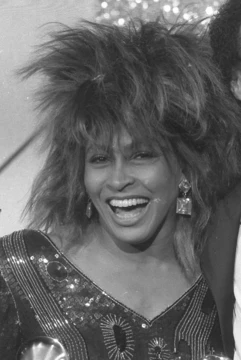
Billy Preston
The hands behind the thunder: one keyboardist who made Tina's voice hit harder.

In the Tina Turner universe, he occupies the vital role of the invisible architect—the session player whose organ and piano lines helped build the architecture behind some of Ike & Tina's most electric recordings during the mid-to-late 1960s, when the band was cutting records in Los Angeles and drawing on the city's deep bench of studio veterans. Beyond his studio work, Preston carved out a genuine solo career with funk and soul singles, collaborated with The Beatles on their final recordings, and became a long-time musical partner of Elton John. In the fan-encyclopedia framing of Tina's story, he is the ghost in the machine: the name you might not spot on a marquee, but whose keys you can hear humming underneath the horn stabs and the vocal fire.
- Role
- Keyboardist, Session Musician, Solo Artist
- Primary Instruments
- Piano, Hammond Organ, Keyboards
- Peak Era
- 1960s–1970s
- Notable Collaborators
- The Beatles, Elton John, Motown roster
- Affiliation
- Los Angeles session scene; Motown-adjacent circuit
- Status
- Deceased (2006)
Lore & Background
Billy Preston grew up in the church, and you can hear the pulpit in every chord he laid down. By the mid-1960s he had become a fixture in Los Angeles studios, a man who could walk into a session, hear the groove the band was chasing, and fill the harmonic space with a single sustained organ note that made the whole room lean forward. In the Tina Turner orbit, his contribution belongs to the era when Ike Turner was writing and arranging with a full studio band, pulling in the best players available to serve the song. Preston's keyboard work in that world was less about soloing and more about texture: a swelling organ pad under a verse, a staccato piano figure that locked in with the backbeat, a gospel run that gave Tina's vocal a place to launch from. Fans who dig into the liner notes and session credits of that period find his name tucked in among the drummers, bassists, and horn players, a quiet signature on records that went on to define a sound. After his session peak, Preston pursued a solo identity with funk-oriented singles and became Elton John's musical director and touring partner for years, a role that kept his hands busy and his name in the credits of some of the biggest live shows of the late 1970s and 1980s. He remained a respected elder in the keyboard world until his death in 2006, leaving behind a body of work that is as much about the records he helped build for others as it is about his own.
In Their Own Story
The studio was already warm from the horns' test run when Billy walked in, his Hammond organ still humming from the previous session. Ike had the chart pinned to the music stand, a few smudged pencil marks where he'd adjusted a chord. "We need it to breathe," Ike said, tapping the desk. Billy didn't answer. He sat, rolled the sustain pedal, and let a single B-flat bloom out of the organ like smoke filling a room. The drummer nodded. The bassist nodded. Tina, standing by the vocal booth with her arms crossed, uncrossed them. "Yeah," she said. "That's the pocket." They ran it four times. The second take was the one. Billy packed up his cables, tipped his hat to no one in particular, and walked out into the LA afternoon, already thinking about the next session, the next groove, the next voice that needed a floor to stand on.
Reader's Guide
If you're tracing the people who built the sound behind Tina's voice in the 1960s, Billy Preston is one of the names that rewards a second look. He wasn't a named band member in the way a touring horn section or a regular bassist might be; he was a session musician, the kind of player a producer called in when the track needed a particular color. In the Ike & Turner recording era, that meant his organ and piano were often the harmonic glue holding the arrangement together beneath the vocals and the horns. His peak session years overlapped with the period when Tina's recordings were finding their signature: driving, gospel-tinged, unapologetically loud. Preston's contribution in that context was about feel and space—knowing when to sustain a chord and when to let the rhythm section carry the line. Fans who compare different takes or different studio versions of tracks from that era can sometimes hear the shift in keyboard texture that a player like him introduces. Beyond the studio, Preston's solo singles and his long partnership with Elton John kept him in the public eye, but for Tina fans the most intimate connection is the one inside the recordings: the organ swell under a bridge, the piano figure that locks the groove. He was part of the ecosystem that made those records possible, and his name in the credits is a small but important thread in the tapestry of the era.
Did You Know?
- Billy Preston played keyboards on The Beatles' 'Get Back' and 'Let It Be' sessions, making him one of the few non-Beatles musicians to appear on those landmark recordings.
- He was a regular member of the Los Angeles 'Wrecking Crew,' the loose collective of session musicians who played on a huge share of 1960s pop and soul records.
- Preston served as Elton John's musical director and touring keyboardist for many years, a role that kept him on the road well into the 1980s and 1990s.
- His solo hit 'That's the Way (I Like It)' became a staple of soul and funk radio in the late 1960s, proving he could carry a record on his own without a star vocalist.
More in Band Members & Collaborators
Elsewhere in the Tina Turner universe
Spotted an error? Know more?
This is a living reference — every entry is fact-audited, and reader corrections feed straight into our audit queue. Suggest an edit · See this site's audit record