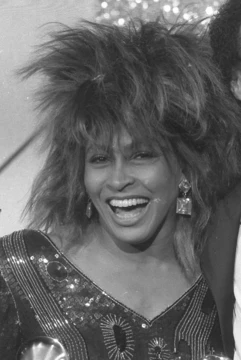
Eric Clapton
Two legends, one stage, and a guitar solo that made the audience forget to breathe.

Eric Clapton is a legendary British guitarist whose name is synonymous with the electric blues-rock tradition. In the Tina Turner universe, he appears not as a permanent fixture of her touring band but as a rare, high-voltage guest collaborator—a moment when two titans of popular music locked horns and strings together on stage, producing a performance that fans still reference as one of the great 'what if they did it more often?' encounters.
His presence in Tina's orbit is best understood as a brief but electric intersection: a master of clean, singing tones and searing overdriven leads meeting an artist whose live energy is built on raw physicality, vocal power, and showmanship. The contrast between Clapton's introspective, feel-driven phrasing and Tina's explosive, full-throated delivery created a tension that made the collaboration feel like a conversation between two very different kinds of rock-and-roll soul.
- Role
- Guest Collaborator / Guest Guitarist
- Primary Instrument
- Electric Guitar
- Musical Heritage
- British Blues-Rock, Cream, Derek and the Dominos, Solo Career
- Affiliation in Tina's World
- Occasional stage guest (not a permanent band member)
- Status
- Active artist; continues touring and recording
Lore & Background
In the broader mythology of rock performance, Eric Clapton occupies a space almost entirely his own. Trained in the church-gospel and Mississippi-blues tradition, he filtered that vocabulary through a British sensibility—clean, articulate, emotionally precise. His work with Cream pushed the electric guitar into the realm of sustained, howling feedback; his later solo work pulled it back into intimate, aching phrasing. Fans of Tina Turner, who built her empire on the idea that a woman could command a stage with the same ferocity as any male rock star, found in Clapton a kindred spirit in the blues idiom even if his stage persona was far more reserved.
The collaboration sits in the late-1980s-to-early-1990s window, a period when Tina was in the full blaze of her solo reinvention—huge sets, a powerful backing band, and a reputation for physical, almost acrobatic performance. Clapton, by contrast, was known for a quieter, more contemplative stage presence. When the two shared a microphone and a guitar amp for even a few minutes, the friction was the point: her volume and verve against his controlled, singing bends. Audiences described the interplay as a call-and-response that neither artist needed to announce—it simply happened, the way two blues musicians in a smoky room find the same chord at the same moment.
For the fan community, the Clapton-Tina moment is less about a single song and more about what it represented: proof that the blues-rock canon was not the exclusive province of one demographic, one gender, or one national tradition. It was a handshake across decades and continents, sealed in feedback and a final, ringing open string.
In Their Own Story
The arena lights dimmed to a deep amber. Tina stood center stage, one hand on the mic stand, the other gripping the edge of the stage lip, her boots planted wide. The house band faded to a single sustained chord. Then, from the left, a figure in a dark jacket walked out with his guitar case open, the familiar silhouette of a Stratocaster catching the light. He didn't bow. He just nodded at her. She nodded back. The first note he played was clean, almost fragile—a single bent string that hung in the air like a question. Tina answered with a low, grinding vocal run that made the monitors shake. He laughed, a short, surprised sound, and hit a chord that bloomed into a wall of warm overdrive. For three minutes, the audience stopped being an audience. There was just the two of them, trading phrases, each one a little longer, a little wilder, until the last note cracked open and the silence that followed was louder than any applause.
Reader's Guide
Eric Clapton's role in Tina Turner's career was that of a rare guest collaborator rather than a permanent band member. The two artists moved in overlapping circles of the blues-rock world—his roots in the British blues scene and Cream, hers in the Memphis and St. Louis R&B tradition filtered through Ike Turner's showmanship. Their stage encounter came during Tina's solo era, when her touring band was already a formidable unit and she did not need a guitar hero to carry the instrumental weight.
What Clapton brought was tonal contrast. Where Tina's live sound was built on driving rhythms, layered vocals, and a percussive physicality, his guitar work was more lyrical, more space-conscious. In a shared set, his clean, singing bends gave her vocals room to breathe, and his overdriven leads matched her energy when the arrangement demanded it. The collaboration was brief by any measure—likely a single performance or a very limited number of appearances—but it carried the weight of two artists who understood the blues grammar at a deep, almost subconscious level.
The defining tension was one of personality as much as music. Clapton was famously private, often described as shy or withdrawn offstage; Tina was the opposite, a performer who fed on the crowd's energy and gave it back tenfold. On stage, that contrast became the engine of the performance: her volume pulling him forward, his restraint giving her something to push against. Fans who caught the moment remember it less as a duet and more as a conversation where neither person needed to raise their voice to be heard.
Did You Know?
- Clapton's guitar tone is often described as 'singing'—a quality that comes from his use of light picks, subtle vibrato, and a preference for clean or lightly overdriven amplification, which contrasts sharply with the hea
- Before his solo career, Clapton was a member of Cream, the supergroup that helped define the extended, improvisatory rock guitar solo in the late 1960s—a style that is the antithesis of the tight, arranged setlists Tina
- Tina Turner's live performances were famous for their physical intensity—backflips, splits, and rapid movement across the stage. A guitarist sharing that space had to be able to play while watching, not just listening, a
- The blues idiom that connects both artists is one of the oldest shared languages in popular music, meaning their collaboration required no translation—just a mutual understanding of where a phrase should bend and where i
More in Band Members & Collaborators
Elsewhere in the Tina Turner universe
Spotted an error? Know more?
This is a living reference — every entry is fact-audited, and reader corrections feed straight into our audit queue. Suggest an edit · See this site's audit record