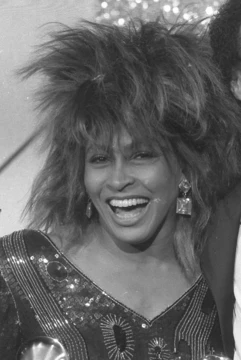
1968 Ed Sullivan Show appearance
The night a million living rooms met the woman who made the stage tremble.

Tina Turner's 1968 appearance on The Ed Sullivan Show stands as one of the earliest moments when the young, ferociously energetic performer broke through to a mass American television audience. Performing alongside Ike Turner and the Kings of Rhythm, she brought a raw, full-body stage presence to a network stage that had long been dominated by more restrained acts, and the broadcast helped cement her as a force in popular music beyond the R&B and soul circuits.
For fans, this appearance is a touchstone: it captures Tina at the height of her Ike-era momentum, when her dancing, her vocal power, and her sheer physical command of a stage were already legendary in live venues but were now being delivered to millions of living rooms across the country. It is often cited as the moment the wider public first *saw* what the recordings alone could not convey.
- Artist
- Tina Turner (with Ike Turner & the Kings of Rhythm)
- Medium
- NBC network television – The Ed Sullivan Show
- Year
- 1968
- Role in career
- Early mainstream TV breakthrough; introduction to a national audience
- Performance style
- High-energy dance, vocal power, full-stage movement
- Significance
- Helped break racial barriers on a major network stage; a defining early image of Tina as a performer
Lore & Background
By 1968, Tina Turner had already spent years as the frontwoman of Ike Turner and the Kings of Rhythm, building a reputation in clubs and R&B venues for a performance style that was almost violent in its intensity. She did not simply sing; she contorted, leapt, swung her hair, and drove the band with her body as much as her voice. When the Sullivan show cameras rolled, that energy was translated into a medium that had never really seen anything like it from a female performer, let alone a Black woman commanding the stage with such unapologetic physicality.
The Ed Sullivan Show had a long history of introducing Black artists to white mainstream audiences, and Tina's slot in that lineage gave her performance a cultural weight beyond a single set of songs. It was not just a concert clip; it was a statement that this kind of raw, joyful, physically liberated performance belonged on the biggest stage in American television. For the audience at home, it was often the first time they encountered the full scope of what Tina could do, and many fans still describe the broadcast as the moment the name 'Tina Turner' became a household reference.
In the broader narrative of her career, the Sullivan appearance sits in the Ike-era chapter, before the solo reinvention of the 1980s. It shows the seed of everything that would later define her: the refusal to be static, the willingness to be physically vulnerable and powerful simultaneously, and the understanding that a performance is a total act, not just a vocal delivery. Fans often contrast this early image with her later solo shows to trace the through-line of her artistry.
In Their Own Story
The studio lights hummed to life and the audience noise swelled into a wall of anticipation. Tina stepped out from the wings in a sequined outfit that caught every bulb on the set, and for a beat the room went quiet in that particular way it does when something about a performer's posture says *I am not here to be polite.* Then the band hit the first chord and she was already moving—hips rolling, arms slicing the air, her hair a dark comet tail whipping in time with the rhythm. She did not stand behind a microphone stand. She owned the floor. Somewhere in the front row, a child tugged a parent's sleeve and whispered, 'Look at her, she's dancing like the music is alive.' The cameras tracked her in wide shots, then cut close on her face mid-belt, and the energy in the room shifted from polite applause to something electric, almost feral. When the final note rang out and she struck a pose, chest heaving, sweat catching the light, the ovation that rolled back through the studio felt less like applause and more like a collective exhale, as if the audience had been holding its breath for the entire set.
Reader's Guide
Origin and catalog placement: This was not a single-song entry but a full live set performed by Ike Turner and the Kings of Rhythm with Tina as the undeniable focal point. It sat in the late-1960s run of her Ike-era catalog, a period defined by soul, R&B, and raw rock-and-roll energy. The Sullivan broadcast captured that sound in a network-TV context, giving it a reach the club circuit never could.
Performance style: What made the appearance iconic was the sheer physicality. Tina did not anchor herself to a mic stand. She traversed the stage, danced with a full-body commitment that bordered on athletic, and used her hair and movement as expressive instruments. The staging on Sullivan was relatively simple—band in a semi-circle, Tina center—but her energy filled every frame. The audience reaction, visible in the broadcast, shifted from polite curiosity to full-throated excitement as the set progressed.
Cultural footprint: The moment became a defining early image of Tina as a performer. It is frequently referenced in retrospectives as the point at which mainstream America could no longer ignore the force she represented. For fans, it is the 'before' photograph in the long story of her career—the spark that preceded decades of evolution, heartbreak, and reinvention.
Did You Know?
- The Ed Sullivan Show was one of the few major American network programs that regularly featured Black artists, making Tina's appearance part of a broader, hard-won shift in television representation.
- Tina's stage presence in this era was already described by those around her as almost superhuman in its energy, a reputation that would only grow in the decades that followed.
- The broadcast helped introduce the Ike Turner and the Kings of Rhythm sound to audiences who had primarily encountered it through records and regional radio, widening the band's national footprint.
- Fans often point to this appearance as the earliest widely visible example of the 'Tina Turner effect'—the sense that a single performer could command an entire room's physical energy.
More in Iconic Songs & Signature Performances
Elsewhere in the Tina Turner universe
Spotted an error? Know more?
This is a living reference — every entry is fact-audited, and reader corrections feed straight into our audit queue. Suggest an edit · See this site's audit record