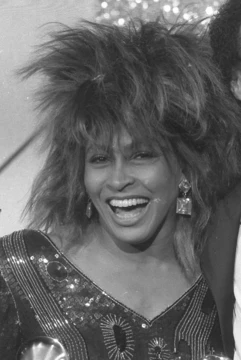
The 1991 Will You Love Me Tomorrow Era
The rock queen lowered her voice and let the silence do the singing.

The 1991 'Will You Love Me Tomorrow' era marks a pivotal moment in Tina Turner's post-comeback career, when the woman who had conquered arenas with thunderous rock-and-roll chose to strip everything back to a whisper. The song—a reimagining of the 1960 Carole King and Gerry Goffin classic first made famous by The Shirelles—showed a 50-something Turner willing to be vulnerable, tender, and unguarded on record after years of performing as an unstoppable force.
This period sits between the seismic 'The Best of Both Worlds' world tour and the full flowering of her mid-90s solo catalog, a transitional stretch where she was redefining what a global rock icon could sound like at the peak of her creative independence. It is an era fans often point to as proof that her range extended far beyond the stage.
- Performer
- Tina Turner
- Original songwriters
- Carole King & Gerry Goffin
- Original recording
- The Shirelles, 1960
- Genre
- Pop ballad / soft rock
- Era context
- Post-comeback solo career, early 1990s
- Turner's age at recording
- Early 50s
Lore & Background
By 1991, Tina Turner had already survived the most public and painful divorce in rock history, rebuilt her career from near-ruin, and headlined a stadium tour that became one of the highest-grossing of the decade. The world expected more of the same: the leather, the power, the voice that could shatter glass. Instead, she reached for a song about a woman who has been hurt before and is asking, with trembling honesty, whether this time will be different. The choice was almost radical in its intimacy.
The recording process for this era reflected a Turner who had full creative control for the first time in her adult life. No longer filtered through Ike's production machine, she could choose to let a piano breathe, to hold a note without pushing it into a scream, to let a lyric land softly in the listener's chest rather than detonate in the speakers. Fans who knew her only as the 'Queen of Rock 'n' Roll' discovered a singer who could make a minor-key ballad feel like a confession whispered across a kitchen table at two in the morning.
This period also carried the weight of her physical and emotional recovery. The years of abuse, the car accident, the near-fatal kidney damage—none of it was far behind her. Singing a song about loving again, about the terror of opening yourself to another person, was not mere artistic choice. It was, for many listeners, a window into a woman still learning to trust. That authenticity is what keeps the era resonant decades later.
In Their Own Story
The studio was quiet in a way Tina had never experienced before. No one was pacing behind the glass. No one was shouting 'do it again, do it louder.' Just the piano, the engineer's hands hovering over the faders, and her own breathing. She closed her eyes and let the first line come out like a question she'd been carrying for twenty years. The take was so soft the engineer almost thought the mic had died. She opened her eyes, nodded once, and said, 'That's the one.' Outside, the Los Angeles sun was setting over the hills, and for a moment the whole building felt like it was holding its breath, listening to a woman who had been a hurricane finally allow herself to be a still pond.
Reader's Guide
1991. The dust from 'The Best of Both Worlds' tour is still settling. Tina has just turned fifty and the industry is already whispering that her moment has passed. She walks into a recording studio in Los Angeles with a simple brief: make a ballad sound like it belongs to a woman who has seen everything and is still asking for love.
The musical landscape around her is shifting—grunge is eating rock radio, R&B is going pop, and the old Motown-era ballad is fading. Into that gap, she places a song written in 1960 by two young songwriters in New York and turns it into something that sounds like it was written in a hospital room, in a car crash, in the long quiet after a marriage that almost destroyed her.
The public perception shift is subtle but real. Audiences who came to her shows expecting a spectacle begin to notice that the quiet moments land harder than the loud ones. Critics who had filed her under 'rock legend, post-Ike' start writing about vulnerability, about a voice that can crack without breaking. The era is short—just a few singles, a handful of studio sessions—but it recalibrates what people believe she is allowed to be.
By the time the mid-90s arrive, the groundwork is laid. She is no longer just the woman who survived Ike Turner. She is the woman who can stand in front of a microphone, say 'will you love me tomorrow,' and make two hundred thousand people in a stadium go utterly, painfully still.
Did You Know?
- The original 'Will You Love Me Tomorrow' was written by Carole King and Gerry Goffin in 1960 and first recorded by The Shirelles, making Tina's version a reinterpretation of a song that was already a generation old by th
- By 1991, Tina Turner had been a fully independent solo artist for over a decade, having left her marriage to Ike Turner in 1976 and rebuilt her career largely on her own terms.
- The 'The Best of Both Worlds' tour (1988–1990) that preceded this era became one of the highest-grossing concert tours of all time, setting an extraordinary benchmark that made the decision to record a quiet ballad feel
- Tina Turner was in her early fifties during this period, a time when the music industry was largely marginalizing women artists of that age, making her continued chart presence and creative output a quiet act of defiance
More in Career Timeline & Eras
Elsewhere in the Tina Turner universe
Spotted an error? Know more?
This is a living reference — every entry is fact-audited, and reader corrections feed straight into our audit queue. Suggest an edit · See this site's audit record