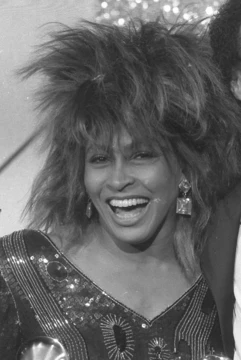
The Ike & Tina Turner Revue Years
Where a St. Louis singer became a Memphis spectacle and the world learned to clap back.

The Ike & Tina Turner Revue Years encompasses the period from the late 1950s through the mid-1970s during which Tina Turner, then Anna Mae Bullock, performed as the frontwoman of one of the most electrifying live acts in American music history. What began as a small R&B group in St. Louis grew into a full-scale touring spectacle anchored in Memphis, Tennessee, blending rock-and-roll energy, soul, and theatrical showmanship into a package that audiences across the country could not ignore.
This era is central to understanding Tina Turner's artistry: it was where her legendary stage presence was forged, where her voice found its signature power, and where the commercial machinery that would eventually consume and ultimately liberate her was built. For fans, these years represent both the genesis of her mythic performance style and the deeply personal struggles that made her later solo triumph all the more resonant.
- Formation location
- St. Louis, Missouri (late 1950s)
- Primary base
- Memphis, Tennessee
- Genre blend
- R&B, rock and roll, soul, theatrical show
- Breakthrough single
- River Deep – Mountain High (1966)
- Chart-topping hit
- Proud Mary (1971)
- Tina departs the Revue
- 1976
- Known for
- High-energy live ensemble performances, Tina's dancing and vocals
Lore & Background
The Revue was never just a band; it was a production. Ike Turner, the bandleader, producer, and manager, built the ensemble around a simple premise: the live show had to be bigger, louder, and more physically demanding than anything the audience had seen. Tina's role was the focal point—her voice, her movement, her willingness to dance in heels, to bend, to project raw emotion across a packed venue. The surrounding musicians, dancers, and choreography existed to amplify that central force rather than dilute it. In an era when R&B acts often played behind a curtain of modesty, the Revue turned the stage into a physical event.
Musically, the group navigated a wide spectrum. Early sets leaned into Memphis house-party R&B and early rock and roll. By the mid-1960s, the sound had sharpened into a more polished, radio-friendly blend of soul and pop, producing the UK smash "River Deep – Mountain High." The early 1970s brought the hard-driving, guitar-forward rock of "Proud Mary," which crossed over to the top of the Billboard charts and cemented the Revue's status as a mainstream force. Each shift in sound reflected both Ike's evolving production instincts and Tina's expanding vocal range and interpretive confidence.
Beneath the spectacle, the personal dynamics were complex and, as later accounts revealed, fraught. Tina's public persona of boundless energy coexisted with a private life marked by control, financial entanglement, and emotional strain. The Revue's commercial success was inseparable from these tensions, and fans who followed the act through the 1970s often sensed the undercurrent even as they cheered. The era's ending—Tina's departure in 1976—was not a single dramatic exit but a slow, painful unraveling that would reshape both her career and her identity.
In Their Own Story
The venue in Memphis was a converted warehouse with a stage that smelled of sweat and cheap cologne. The house lights dropped, and the opening riff hit like a physical force. Tina stepped forward in a sequined dress that caught the single spotlight, her heels clicking a rhythm against the boards before she even sang. The crowd—Black and white, young and old—leaned into the sound as one body. She hit the high note, arched back, and the room exhaled. Behind her, the horns swelled, the dancers spun, and for three minutes the only thing that existed was the vibration in the floor. After the set, the dressing room was a blur of cigarette smoke, handshakes, and a glass of water she never finished drinking. She was already thinking about the next city, the next song, the next time the lights would drop and she would become the thing the crowd needed to see.
Reader's Guide
1956–1960: A young Anna Mae Bullock arrives in St. Louis and is drawn into Ike Turner's orbit. The early group plays small clubs and house parties, building a reputation for relentless energy. The sound is raw, Memphis-rooted R&B with a rock-and-roll edge. Tina's stage presence—dancing, vocalizing, commanding the room—begins to distinguish the act from the dozens of similar groups on the circuit.
1962–1966: The couple marries, and the Revue settles into Memphis as its home base. The touring machine grows: more musicians, more choreography, more spectacle. In 1966, "River Deep – Mountain High" becomes a number-one hit in the United Kingdom, introducing Tina's voice to a far wider audience and signaling that the act could cross genre and geographic boundaries.
1968–1974: The Ed Sullivan Show appearance in 1968 thrusts the Revue into prime-time American living rooms. The early 1970s produce the hard-rocking "Proud Mary," a number-one single that redefines the group as a rock act rather than a soul act. Public perception shifts: Tina is no longer just the singer in a band; she is the event. Yet the personal cost of the life—financial control, public image management, emotional pressure—deepens.
1976: Tina walks away. The Revue continues briefly under Ike's direction but never recaptures its former electricity. For fans, the era closes not with a triumphant finale but with the quiet, devastating finality of a door shutting. What remains is the sound, the image, and the knowledge that the woman who danced in heels under Memphis warehouse lights was building, note by note, the foundation for everything that would come next.
Did You Know?
- Tina Turner's stage name was suggested by Ike Turner, who shortened her given name Anna Mae to the punchier 'Tina' for the marquee.
- "River Deep – Mountain High" was a far bigger chart success in the United Kingdom in 1966 than it was in the US, where it stalled at a modest position.
- The Revue was deliberately structured as a large live ensemble rather than a small studio group, meaning the touring show was the primary product and the recordings were secondary snapshots of it.
- Tina Turner was known for performing in high-heeled shoes and executing demanding dance moves throughout sets, a physical commitment that was unusual and striking for female performers of that era.
More in Career Timeline & Eras
Elsewhere in the Tina Turner universe
Spotted an error? Know more?
This is a living reference — every entry is fact-audited, and reader corrections feed straight into our audit queue. Suggest an edit · See this site's audit record