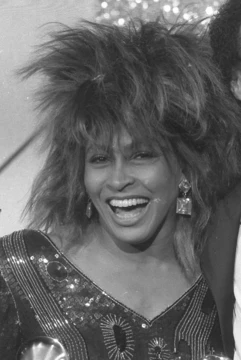
Madonna
She turned reinvention into a religion and made the audience the congregation.

Madonna is the cultural force behind one of the most sustained and deliberately sculpted pop careers in modern history. Born Madonna Louise Ciccone in Bay Shore, New York, in 1958, she rose from the New York dance-club scene of the early 1980s to become a global icon whose influence stretches across music, fashion, film, and the very vocabulary of celebrity. In the broader landscape of popular culture, she occupies a role similar to a living myth: a figure who is simultaneously a specific woman and an archetype that others measure themselves against.
This entry examines her legacy not as a single album or era but as a continuous thread of reinvention that reshaped what a female pop artist could say, do, and demand from the industry around her.
- Subject
- Madonna (Madonna Louise Ciccone)
- Role
- Singer, songwriter, dancer, actress, cultural icon
- Commonly known as
- The Queen of Pop
- Debut studio album
- Madonna (1983)
- Rock and Roll Hall of Fame
- Inducted 2008
- Signature era
- 1980s–present (continuous reinvention)
- Key film credit
- Evita (1996)
Lore & Background
Madonna's breakthrough in the early 1980s was not merely a hit single but a packaging of self. Arriving from the downtown New York performance-art and club scene, she brought a theatricality and a willingness to be provocative that the mainstream pop machine had not yet codified. Her early work—dancing in tight leather, adopting and shedding personas, courting controversy with lyrics about sexuality and independence—established a template: the artist as a mutable, confrontational character rather than a fixed product.
What distinguished her from peers who also reinvented was the *intentionality* and *publicness* of the transformation. Each album cycle read like a new act in a long play. The innocent girl, the seductress, the religious icon, the feminist provocateur, the global citizen—these were not accidental shifts but authored chapters. She treated her own image with the same rigor a novelist treats a protagonist, and the audience was invited to watch the author at work.
Her cultural reach extended well beyond the chart. She influenced how women in pop negotiated sexuality, how music videos became a primary artistic medium, and how a celebrity could function as a brand, a political voice, and a fashion statement simultaneously. Generations of artists from the 1990s onward cite her as the blueprint for owning one's narrative in an industry that preferred to write it for them.
In Their Own Story
The lights in the club are still warm amber when the set ends, and the crowd hasn't moved. A young dancer in the back row, barely nineteen, pulls out a crumpled notebook and writes: *She didn't perform a song tonight. She performed an argument.* The dancer will go home, tape a cassette of the encore for a friend, and spend the next two years trying to figure out how to make a chorus that sounds like a declaration rather than a request. Up on stage, the woman in the black lace bodysuit is already pulling off her gloves, talking to a producer about a video concept that will make three network executives call their lawyers by Friday. The argument, the dancer will learn, is the point. It always was.
Reader's Guide
The facet examined here is **agency as artistic method**. Madonna's most durable legacy is not a sound or a dance move but a posture: the insistence that a female pop artist can be the author of her own image, sexuality, and commercial trajectory rather than a character written by a record label. She carried this forward through every era—from the androgynous leather of *Like a Virgin* to the explicitly feminist confrontations of the 1990s and the global-citizen activism of later decades. The thread is consistent: control the narrative or lose it.
Who carried it forward? The list is long, but a few names anchor the lineage. Lady Gaga has spoken publicly about Madonna as a foundational influence on her own approach to spectacle and self-mythology. Beyoncé's *Lemonade* era, with its unapologetic ownership of Black female sexuality and narrative, extends the same principle into a different cultural register. Even in dance music, producers and DJs who build entire visual worlds around a set—treating the performance as a authored story rather than a playlist—inherit the logic Madonna made mainstream in the mid-1980s.
How does it still resonate? In an era of social-media self-branding, the Madonna model has been democratized: every creator is expected to be their own marketing department, their own provocateur, their own reinvention engine. The specific content changes, but the structural lesson—that the artist who controls the frame controls the meaning—remains the operating principle of modern pop. Madonna didn't just make records; she made a *method*, and the method outlived any single album.
Did You Know?
- Before her solo career, Madonna was a backup dancer and session musician in New York, performing with bands like Emmylou Harris and the Blues Brothers touring groups, which grounded her stagecraft in a working-musician's
- Her 1989 single 'Like a Prayer' sparked a wave of radio bans and a famous Pepsi commercial withdrawal, yet it became one of the most discussed pop songs of the decade—a case study in how controversy and commercial succes
- Madonna's 1996 film role as Eva Perón in 'Evita' demonstrated that her cultural capital could cross into prestige cinema, earning critical recognition and broadening her audience beyond the music world.
- She has been a consistent presence in the Rock and Roll Hall of Fame conversation for years before her 2008 induction, a reflection of how long her cultural footprint has outlasted any single chart cycle.
More in Legacy & Cultural Impact
Elsewhere in the Tina Turner universe
Spotted an error? Know more?
This is a living reference — every entry is fact-audited, and reader corrections feed straight into our audit queue. Suggest an edit · See this site's audit record