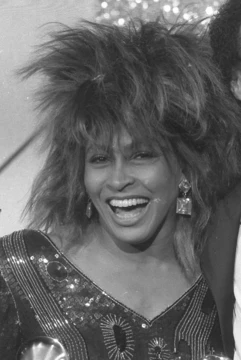
Beyoncé
The woman who turned the arena into a cathedral and the encore into a declaration of war.

In the sprawling, fan-curated 'Tina Turner Universe'—a cultural landscape built around the mythos of the Queen of Rock 'n' Roll—Beyoncé Knowles-Carter occupies the role of the modern heir to that throne. She is the artist who took the blueprint of ferocious stage presence, unapologetic female power, and the idea that a woman's body and voice on stage are acts of revolution, and scaled it to a global, multimedia empire.
This entry does not treat Beyoncé as a fictional character but as a living node in the real-world lineage that Tina Turner's career helped forge: the tradition of the Black woman who commands a stadium not by permission but by sheer, undeniable force. Fans of the Turner legacy see in Beyoncé's performances the same electric current, the same refusal to be a passive figure, and the same understanding that spectacle and substance are not opposites.
- Role
- Singer, songwriter, performer, visual artist, and cultural icon
- Affiliation
- Solo artist; formerly a member of Destiny's Child
- Origin
- Houston, Texas
- Status
- Active
- Signature contribution
- Multimedia performance art, visual albums, and the elevation of live spectacle as a primary artistic medium
- Legacy connection
- Carries forward the Turner tradition of the woman who owns the stage through physical power, vocal command, and unapologetic self-expression
Lore & Background
Within the fan-constructed Turner Universe, the 'lineage of fire' is a recurring motif: a chain of performers who understood that a woman on stage is not decorating the room but igniting it. Tina Turner, with her split lip, her thunderous voice, and her ability to make a stadium of fifty thousand feel like a single held breath, established the grammar. Beyoncé, arriving in the late 1990s with Destiny's Child and then detonating into a solo career of staggering scope, speaks that grammar fluently. Where Turner's power was forged in the crucible of survival—abuse, industry exploitation, reinvention—Beyoncé's is forged in the crucible of expectation: the pressure to be flawless, to be the 'it girl,' to be the face of a label. Both women answered that pressure by making the performance itself a form of defiance.
Fans of the Turner legacy often note a specific parallel in how both artists treat the body as an instrument of narrative. Turner's famous split lip became a symbol of resilience rather than a flaw to be hidden. Beyoncé's choreography—whether the sharp, almost violent precision of her 'Single Ladies' era or the fluid, hypnotic movement of 'Renaissance'—tells stories of control, release, and reclamation. In the fan encyclopedia's framing, both artists practice what might be called 'embodied testimony': the idea that what a woman does with her body on a stage is as eloquent as any lyric.
The Turner Universe also celebrates the concept of the 'second act.' Turner's greatest cultural impact arguably came after her divorce from Ike Turner, when she rebuilt her career from the ground up and became, if anything, more electric. Beyoncé's own trajectory—stepping out from the group, navigating a highly public marriage, and then using projects like 'Lemonade' to explore themes of betrayal, ancestry, and self-reclamation—reads to fans as a parallel arc. The fan community treats both women as proof that the most powerful chapter is often the one you write after the world expects you to stop.
In Their Own Story
The lights in the arena drop to a deep amber, and for three seconds the crowd is silent—not the silence of anticipation, but the silence of recognition. Then a single note, low and resonant, cuts through the speakers like a blade through velvet. The stage floods white. She is there, already moving, already breathing the room in. The bass hits and the floor shakes, and somewhere in the third row a woman in her sixties—old enough to have seen a certain blonde figure in a black leather outfit make a whole stadium lose its mind in the seventies—wipes her eyes and sings along. The performer does not see her. The performer does not need to. The performer is in conversation with the air itself, with the electricity, with the ghost of every woman who stood on a stage before her and was told to be smaller. The encore begins. The amber light returns. And the silence, this time, is not recognition. It is prayer.
Reader's Guide
This entry examines the facet of Tina Turner's legacy most directly inherited by Beyoncé: the doctrine that a woman's live performance is not entertainment but sovereignty. Turner established, in the 1960s and 70s, that a female rock performer could be physically dominant, vocally aggressive, and sexually autonomous without apology. She did not need a male bandleader to validate her. She did not need to soften her voice for a radio producer. The stage was her territory, and she ruled it.
Beyoncé carried this forward by industrializing it. Where Turner's power was singular—a one-woman storm—Beyoncé's is architectural: elaborate choreography, costume design, visual storytelling, and a production scale that turns a concert into a cinematic event. Her visual album 'Lemonade' (2016) extended the performance beyond the stage into a narrative film, arguing that a woman's interior life—her grief, her rage, her joy—is worthy of the same spectacle as her external triumph.
The resonance today is visible in a generation of artists who treat the live show as the definitive text. When a young performer debuts with a full choreography team, a narrative arc, and a visual identity that resists the 'pretty and passive' default, she is working in a tradition that Turner broke open and Beyoncé polished to a mirror shine. The fan community of the Turner Universe sees this not as imitation but as inheritance: the throne was never empty, only waiting for the next woman bold enough to sit in it and make the room shake.
Did You Know?
- Beyoncé rose to global fame as a member of Destiny's Child before launching a solo career that would redefine the expectations for a female pop and R&B artist.
- Her 2016 visual album 'Lemonade' was released as both a music project and a narrative film, a multimedia approach that fans of the Turner legacy see as a natural evolution of the idea that a performance should tell a com
- Both Tina Turner and Beyoncé have been central figures in conversations about Black women's representation in the music industry, though in different decades and with different cultural pressures.
- Beyoncé was born in Houston, Texas, a city with a rich R&B and soul music heritage that shaped the sonic landscape she grew up in.
More in Legacy & Cultural Impact
Elsewhere in the Tina Turner universe
Spotted an error? Know more?
This is a living reference — every entry is fact-audited, and reader corrections feed straight into our audit queue. Suggest an edit · See this site's audit record