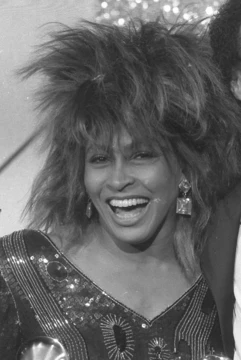
Oprah Winfrey
Two queens, one revolution: the women who made the world stand up and listen.

Oprah Winfrey occupies a vital space in the Tina Turner fan encyclopedia as the living embodiment of the broader movement of Black women who shattered ceilings in American entertainment during the 1980s and beyond. While she is not a character in Tina's musical narrative, her genuine, decades-long friendship with Turner places her squarely within the cultural orbit that made Tina's story possible and amplified. Fans of Tina Turner often find in Oprah a parallel force: a woman who refused to be diminished, who built an empire from the ground up, and who used her platform to champion others who had been overlooked.
In this entry, Oprah is examined not as a performer in Tina's world but as a fellow architect of the landscape in which Tina's legend was built. Their mutual respect, their shared history of overcoming extraordinary adversity, and their parallel trajectories from hardship to global influence make Oprah an essential reference point for anyone studying the cultural ecosystem surrounding Tina Turner's career.
- Role
- Cultural Icon, Media Mogul, Fellow Trailblazer
- Affiliation
- Harpo Productions (independent)
- Oscar
- Best Supporting Actress – The Color Purple (1985 film)
- Connection to Tina
- Close personal friend and mutual admirer
- Status
- Living legacy; ongoing philanthropy and advocacy
- Shared Era
- 1980s–present, parallel rise to global stardom
Lore & Background
The friendship between Oprah Winfrey and Tina Turner is one of those rare bonds in entertainment that fans treat almost as mythology. Both women arrived in the public eye carrying the weight of early trauma, both refused to let the narrative of their pain define them, and both built empires that dwarfed the industries they entered. In the 1980s, as Tina was redefining what a solo female rock act could look like and Oprah was transforming daytime television into a cultural institution, they recognized in each other a kindred spirit. Their interactions—public appearances, private conversations, the quiet nods across a room at an awards ceremony—carried the weight of two women who had earned their thrones the hard way.
Within the wider Tina Turner fan community, Oprah often appears in discussions about what it meant to be a Black woman commanding a room of millions in the 1980s and 1990s. Where Tina did it with a voice that could shatter glass and a stage presence that made audiences forget to breathe, Oprah did it with a gaze that made a guest confess their deepest secret and a platform that turned a living room into a sanctuary. Fans see in both women the same refusal: a refusal to be a footnote, a refusal to be managed, a refusal to be small.
The cultural reverberations of their parallel legacies extend well beyond any single era. Younger artists and media figures frequently cite both women as foundational influences, and the spaces they carved out—on stage, on screen, in boardrooms—remain the architecture within which today's Black women in entertainment operate. In the fan encyclopedia, Oprah is the bridge between Tina's story and the world that story helped create.
In Their Own Story
The ballroom was warm, the kind of gold-and-velvet warmth that only a room full of people who had survived something can produce. Tina stood near the bar, a glass of water in her hand, watching the crowd swirl. She spotted the familiar silhouette across the room—shoulders squared, head tilted slightly as if listening to a frequency only she could hear. Oprah. They hadn't spoken in weeks, maybe longer, the way two women with empires to run sometimes drift apart without meaning to.
Tina set her glass down. Crossed the room. Didn't announce herself, didn't perform. Just walked up, put a hand on Oprah's shoulder, and said something low and private that made Oprah's composure crack into a laugh so genuine it startled the people nearby. For a moment, the icons dissolved. There was just one woman who had been small and hungry and afraid, and another who had been told she wasn't enough. And the hand on the shoulder said: I remember. I remember, and I'm proud of you, and you don't have to be the version they expect tonight.
Oprah squeezed her fingers once. Nodded. Then turned back to the room, and the icon reassembled itself, seamless as a stage costume. But the two of them knew. They always knew.
Reader's Guide
This entry examines the facet of Tina Turner's cultural impact that lives not in her music but in the ecosystem of women she helped normalize: the idea that a Black woman could be the center of the room, the owner of the narrative, the one who set the terms. Oprah Winfrey is the clearest parallel in that ecosystem, and understanding their parallelism sharpens our reading of Tina's legacy.
In the 1980s, the entertainment industry offered Black women a narrow set of roles. Tina refused to be a backup, a sidekick, a footnote to a man's career. Oprah refused to be a hostess, a decorator, a palatable voice in a space built by and for others. Both women looked at the available scripts and said, in their own way, no. Tina did it by building a solo career so electric that the industry had no choice but to rebuild around her. Oprah did it by turning a local talk show into a 25-year cultural institution and then into a media company that operated entirely on her terms.
Who carried this forward? The list is long and growing. Artists like Beyoncé, who has spoken about the freedom of owning her image and her business; media figures who build platforms rather than renting them; a generation of women in entertainment who treat ownership as the default rather than the dream. The specific example that resonates most in fan circles is the way younger Black women in music and media describe walking into a room and feeling, for the first time, that they are the main character. That feeling was not inevitable. It was built, in part, by a woman with a voice like a freight train and a woman with a gaze like a lighthouse, both refusing to be anything less than the center.
The resonance today is not nostalgia. It is infrastructure. Every time a Black woman launches a label, a show, a brand, and is told she is the first, she is walking a path that was not paved but bulldozed. Tina and Oprah are the two most visible figures in that bulldozing, and their parallel legacies remind us that the road was not always there. It was made.
Did You Know?
- Oprah Winfrey and Tina Turner were close personal friends, and their mutual respect was a recurring theme in both women's public interviews throughout the 1990s and 2000s.
- Oprah won the Academy Award for Best Supporting Actress for her role in The Color Purple, a film that itself drew on the same tradition of Black women's resilience that defined Tina Turner's career.
- Both women built their empires while operating in industries that had historically marginalized Black women, and both have spoken publicly about the specific pressures of being a Black woman in a white-dominated industry
- Tina Turner's 2006 autobiography, My Life, and Oprah's own public storytelling both emphasize the theme of reinvention after profound personal crisis, a narrative thread that fans of both women frequently draw connection
More in Legacy & Cultural Impact
Elsewhere in the Tina Turner universe
Spotted an error? Know more?
This is a living reference — every entry is fact-audited, and reader corrections feed straight into our audit queue. Suggest an edit · See this site's audit record